Beyond Impressions: How In-Store Retail Media Proves Sales Lift
In-store retail media lets brands measure more than impressions: it shows whether an ad actually sold more product. This blog explains how sales lift is measured in the aisle, what a good lift report includes, and how Dolphin Retail Media helps brands prove real results.
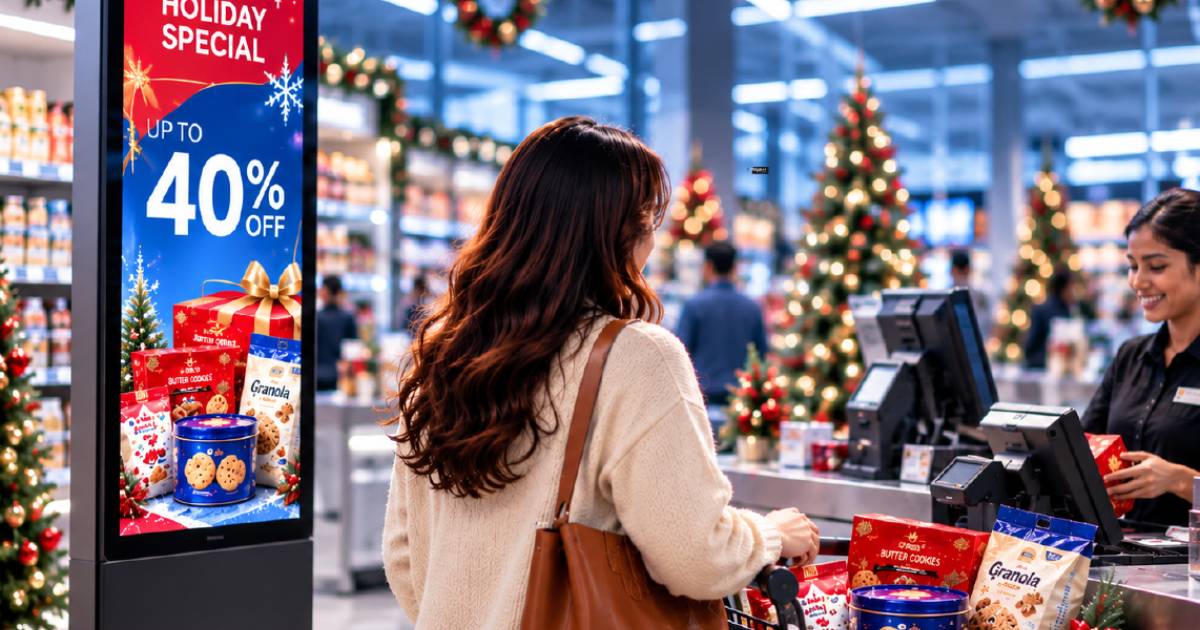
Retail media has become one of the fastest-growing channels in advertising. Retailers have turned their websites, apps and stores into media networks, giving brands a way to reach shoppers close to the moment they buy, often backed by the retailer's own shopper and sales data.
Most of that growth started online, where every click and add-to-cart can be tracked. But the majority of purchases still happen in physical stores. That is why the next chapter of retail media is moving into the aisle, with digital screens in grocery stores, convenience stores, pharmacies and other everyday venues.
As more budget shifts to in-store retail media, brands are asking a sharper question. Impressions tell you an ad was seen. Sales lift tells you it worked. So how does in-store retail media prove it actually sold more product? Here is how measurement works, what a good lift report includes, and the mistakes that hide real results.
Why in-store retail media is built for measurement
Online retail media measures clicks and add-to-carts. In-store retail media goes one step closer to the sale: the shopper sees the ad on the way to the shelf, then pays at the register a few minutes later. That short, traceable path is what makes it so measurable.
- Point-of-purchase placement. Screens sit where shoppers decide, so the ad and the product share the same visit.
- Known locations. Every screen has a fixed address, so results can be compared store by store and market by market.
- Retailer data. Retail media networks work directly with the stores that host their screens, so campaigns can be measured against real sales records rather than estimates.
Three ways retail media measures sales lift
The strongest proof combines three things: a controlled experiment, sales data and audience signals.
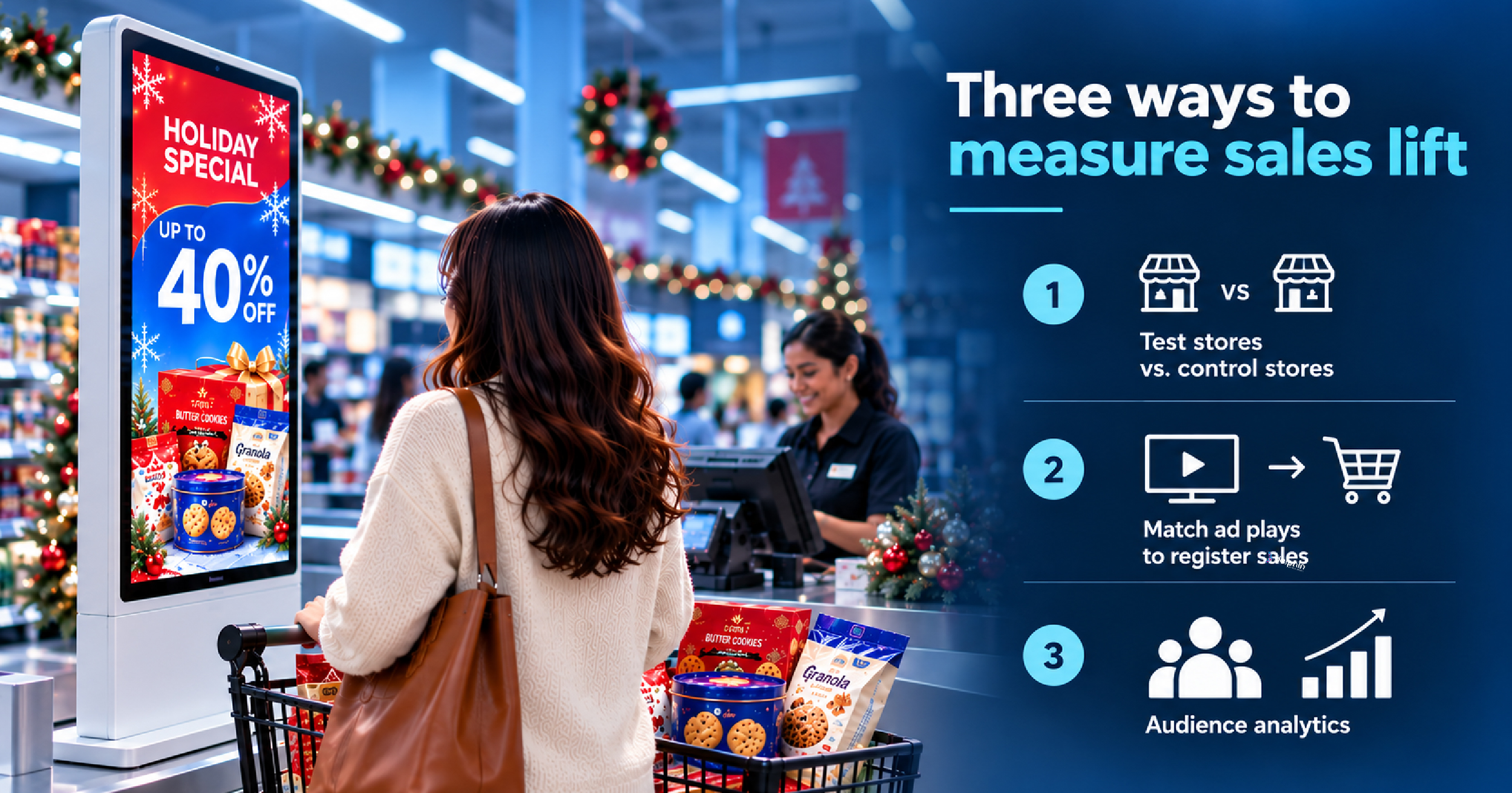
1. Test stores vs. control stores
The campaign runs in a set of stores and is held back in similar stores. Sales of the promoted product are compared in both groups, before and during the campaign. The extra growth in the test stores is the incremental lift, because both groups faced the same season, weather and pricing.
2. Matching ad plays to register sales
Because every in-store screen has a known location and schedule, ad plays can be lined up against point-of-sale data. That shows units sold during the campaign, sales during the hours the ad ran most, and which stores responded best. A highway billboard can't be tied to a single register; an in-store screen can.
3. Audience analytics
Sales data shows what happened; audience data helps explain why. Many in-store screens now use sensors and AI-powered analytics to capture anonymous, aggregated signals such as impressions, foot traffic and dwell time. When those signals rise alongside sales, brands see the full picture: the right shoppers saw the ad, and they bought.
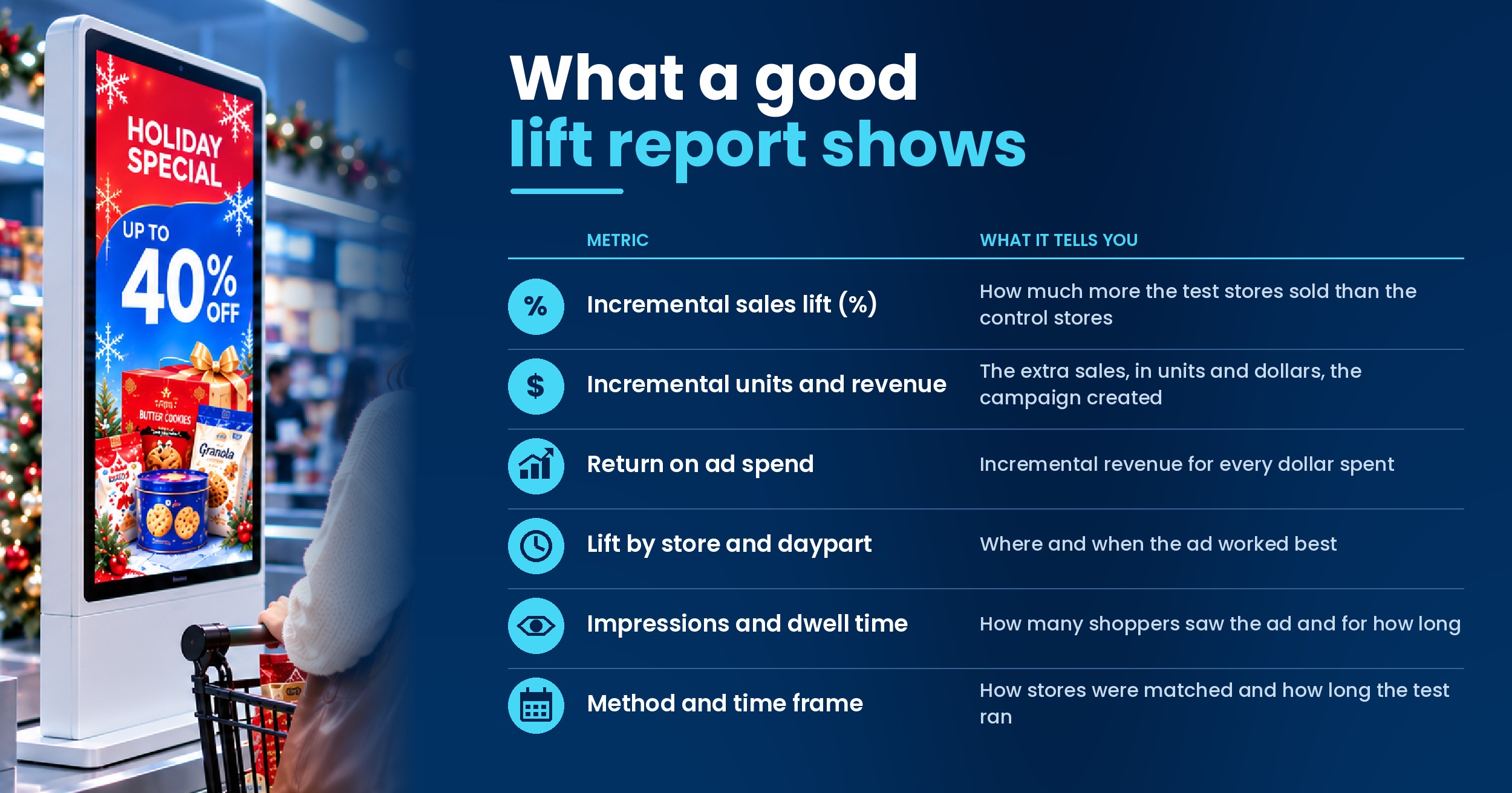
What a good lift report should show
A credible report goes beyond total sales. It isolates what the ad added and explains how the result was measured. These are the metrics brands should expect from a retail media network:
Five mistakes that hide real lift
Most campaigns that "didn't work" were simply measured badly. Avoid these common traps:
1. No baseline. Without pre-campaign sales, there is nothing to compare against.
2. Mismatched stores. Comparing a busy urban store with a quiet suburban one tells you about the stores, not the ad.
3. Changing price mid-test. A discount in the test stores makes it impossible to separate the ad's effect.
4. Too short a flight. A week or two rarely shows a reliable pattern.
5. Counting total sales. Sales that would have happened anyway are not lift.
Checklist: set up a campaign that proves lift
Proving lift starts before the first ad plays. Brands and retail media networks should agree on these steps together:
- Define one clear goal, such as unit sales of a specific product.
- Agree on the sales data source with the retailer or POS partner.
- Choose matched test and control stores.
- Capture at least four weeks of baseline sales.
- Run the campaign for four weeks or more.
- Keep price and shelf placement the same in both groups.
- Review impressions and dwell time alongside sales.
- Report incremental lift, not total sales.
Why proven lift matters for retailers too
A retail media network works for two sides: the brands that advertise and the retailers that host the screens. Measurable results benefit both.
For retailers, proven lift means the screens in their stores do more than display ads. They help move product off the shelf, attract repeat advertisers, and create a steady new stream of advertising revenue. When brands can see that a campaign sold more product, they come back, and the retailer's in-store media becomes more valuable over time.
How Dolphin brings it together
This is exactly the space Dolphin Retail Media was built for. As an in-store retail media network, Dolphin connects brands with shoppers through more than 7,000 screens in grocery stores, convenience stores, pharmacies, malls, gyms, restaurants, office supply retailers and urban panels, placed right where buying decisions happen.
Dolphin’s audience numbers are independently audited by third parties such as Geopath, the audience measurement standard for out-of-home media, so brands can trust that impressions reflect real shoppers, not estimates. Sales results come directly from the store owners who host Dolphin’s screens, giving brands real register data to set alongside those audited impressions. Together, they create a clear, credible picture of what each campaign delivered.
Because Dolphin works hand in hand with its retail partners, both sides benefit: brands reach shoppers at the point of purchase with results they can verify, and retailers earn new advertising revenue from the screens in their stores
This holiday season, countless buying decisions will be made in the aisle. Brands that show up there, and measure the result properly, will know exactly what their budget delivered.
Want a campaign built to prove lift? Talk to Dolphin Retail Media about a measurable in-store plan before holiday inventory fills, or reach out at sales@dolphin-digital.com.